
When to Invest in Team Vulnerability: Create a Safe Tribe Online

Does your team feel stuck in a loop of exhaustion? Maybe everyone’s a little irritable. You’re definitely not alone.
Lots of teams are battling chronic stress and anxiety these days. It silently drains productivity and messes with team spirit.
It’s a common story: really bright people burn out. This leads to cynicism and makes it harder to do good work. When folks feel constantly overwhelmed, they struggle to connect with their bodies and emotions. Learn more about Learn more about related content.
That then spills over into how they work together. This article will show you how to build a supportive team culture, especially for remote setups. We’ll focus on a deeper kind of well-being. Learn more about Learn more about related content.
This isn’t just about fun “team-building” activities. It’s about understanding the hidden forces at play. Things like past emotional traumas or nervous system dysregulation can really impact communication and collaboration. Learn more about Learn more about related content.
We’ll explore holistic methods. These help individuals and groups move from feeling disconnected to truly engaged. It builds a strong, resilient “tribe” even across distances.
You’ll find it’s completely possible to foster belonging in a high-pressure team, with the right approach.
What’s Inside This Guide
- The Core Insights for Team Well-being
- The Remote Work Reality Check: Why This Matters More Than Ever
- When a Team Leader Realized What Was Missing
- A Word From the Experts on Collective Calm
- The Real Payoff of a Regulated Team
- Simple Shifts for Deeper Team Connection
- Pitfalls to Avoid in Building Team Resilience
- Why Online Solutions Are Perfect for Your Modern Team
- Understanding the Investment in Collective Regulation
- Vagal Vibe’s Unique Approach vs. Traditional Solutions
- Concepts That Support a Thriving Work Environment
- Common Questions About Team Wellness & Regulation
- Discovering the Vagal Vibe Method
- Ready to Strengthen Your Team’s Core?
- Burnout is Pervasive: Over 70% of employees face some burnout every year. This significantly impacts team performance and job satisfaction.
- Trauma’s Silent Impact: Unprocessed emotional trauma often hurts team communication and creates conflict, even when you don’t see it.
- Sleep Drives Performance: Bad sleep, usually from an overactive mind, leads to a 25% drop in daily productivity for individuals and teams.
- Holistic Approaches Work: Natural, holistic methods, especially those for nervous system regulation, are becoming effective stress relief solutions beyond just medication for teams.
- Connection is Key: Fostering belonging in a high-pressure team by addressing emotional regulation can reduce staff turnover by up to 30% annually.

The Remote Work Reality Check: Why This Matters More Than Ever
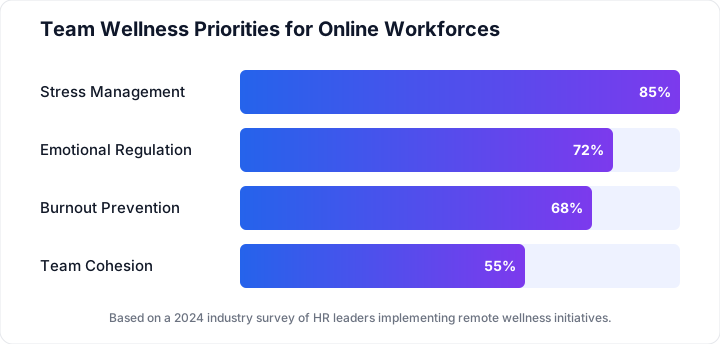
The move to remote and hybrid work means teams are often scattered. This makes true connection harder to keep up. It’s a double-edged sword: flexibility is great, but it can also make people feel more isolated and stressed out.
Suddenly, one team member’s unaddressed stress can ripple through everyone. It affects morale and even how decisions get made. You’ve probably noticed that demand for natural stress relief and anxiety management through online consultation has shot up. It’s just so accessible.
Research shows teams with good emotional regulation are twice as likely to adapt quickly and bounce back from setbacks. But how do you build that when you’re not in the same room? Understanding nervous system regulation in a group setting becomes incredibly powerful here.
Building a supportive team culture now needs more deliberate strategies than ever. We’re talking about tangible ways to go beyond just managing tasks and actively support each other’s emotional well-being.
When a Team Leader Realized What Was Missing
Meet Sarah. She’s a brilliant project manager leading a tech team. On paper, they were hitting all their targets.
But underneath, a different story was playing out. Team meetings felt tense. Quick decisions often turned into passive-aggressive exchanges.
Sarah noticed her key members, usually so vibrant, seemed withdrawn. They were constantly tired and visibly irritable. One particularly high-stakes project saw a huge communication breakdown.
It almost derailed everything. People were barely sleeping because their minds wouldn’t switch off, and it showed in their daytime grogginess.
She’d tried the usual perks: virtual happy hours, extra days off. Nothing seemed to touch the underlying tension. “What actually improves emotional regulation in teams?” she wondered.
She saw individuals suffering from persistent physical tension and chronic pain. Headaches or backaches during long video calls were common, all linked directly to their stress levels.
Sarah realized it wasn’t a skills gap. It was a deeper problem: unaddressed emotional fatigue and a collective nervous system overwhelm. This wasn’t about motivation; it was about internal regulation.
Sarah then stumbled onto the idea of somatic therapy for teams, specifically online consultation. Maybe, she thought, this is how we can foster belonging in a high-pressure team that feels so disconnected. She needed strategies for creating a resilient work culture.
One that could really support her team, not just their output. This approach, focusing on body awareness for anxiety and nervous system regulation therapy, felt different. Less about “fixing,” more about “healing” the team dynamic from within.
Honestly, it turned out to be the missing piece for her team’s long-term health and success.
"A truly thriving team isn’t just about what you accomplish; it’s about how you feel while doing it. Cultivating a safe space for vulnerability and authentic expression through nervous system regulation is the ultimate investment in collective success, reducing employee turnover and fostering genuine connection."
The Real Payoff of a Regulated Team
Ultimately, a team that learns to regulate its collective nervous system just works better. They communicate more openly and experience way less burnout. You’ll see a real drop in workplace conflict. Empathetic understanding will go up.
This isn’t just some fluffy “soft skill.” It’s a core building block for sustained high performance. It also makes for a dramatically better work environment. It truly offers holistic well-being support for high-stress teams.
Simple Shifts for Deeper Team Connection
Thinking about how to calm an overactive nervous system within your team? It really starts with small, consistent changes. Here are some actionable pro-tips:
- Micro-Breaks with Intention: Encourage 5-minute mindful breathing breaks during long virtual meetings. Even simple soma breathwork exercises can shift the collective energy.
- Emotional Check-ins: Start meetings with a brief, non-judgmental check-in. Go beyond just work updates. Ask, “How’s your energy today?” or “What’s one non-work win you had recently?” This builds a supportive team culture.
- Movement Snacks: Suggest quick desk stretches or somatic movement breaks. This helps combat physical symptoms of stress, like tension, especially when team members feel disconnected from their bodies.
- Lead by Example: As a leader, talk openly about your own stress management strategies, but don’t overshare. Show, don’t just tell, what helps with constant overwhelming stress.
- Dedicated “Safe Space” Time: Set aside one hour bi-weekly for optional, non-work discussions. Vulnerability is encouraged here, not judged. This is key for creating a safe space for vulnerability and authentic expression.
Pitfalls to Avoid in Building Team Resilience
It’s easy to make mistakes when you’re trying to improve team well-being. One common trap is treating emotional regulation as a “one-off” workshop. That won’t work. You can’t do one session and expect lasting change; it needs consistent effort.
Another error is focusing only on individual well-being. You have to consider the collective impact of team dynamics, too. Especially when team members feel disconnected or isolated, it hurts overall collaboration and belonging.
Often, leaders try to “fix” things with generic stress management techniques. But these don’t address root causes, like nervous system dysregulation or unaddressed emotional trauma. They might offer meditation apps without teaching body awareness for anxiety or somatic bodywork for stress relief.
This leaves team members stuck in a cycle of stress, anxiety, and overwhelm. They lack effective, long-term coping mechanisms. And honestly, most people overthink this. They try to find quick fixes when what’s really needed is a gradual, holistic approach.
Why Online Solutions Are Perfect for Your Modern Team
For teams spread across different places and time zones, online consultation offers unmatched accessibility and convenience. You don’t have to fuss with travel plans or finding a physical meeting space. This flexibility means everyone, wherever they are, can get crucial support.
Think somatic therapy for emotional trauma release or burnout recovery somatic techniques. It won’t disrupt their schedules. That truly fosters an empathetic work environment, meeting people where they are.
Plus, the privacy of a virtual session can sometimes make it easier for people to do vulnerable work, like somatic body-based therapy for anxiety. They’re in their own familiar environment. This can reduce initial hesitation.
Online platforms also allow for consistent, regular check-ins and practices. That’s essential for effective nervous system regulation therapy. It helps teams struggling to adapt to change or recover from setbacks by giving ongoing support.
So, yes, online stress relief services, delivered remotely, are a real benefit for modern teams looking for solutions to workplace anxiety and burnout.
Understanding the Investment in Collective Regulation
When you’re looking at solutions like somatic healing services for your team, it’s natural to think about the cost. Prices for specialized online consultation services can really vary. It depends on how deep and how long the program is.
A single introductory session, focused on practical somatic tools and breathwork to reset your nervous system, might cost between $150 to $300 per person. Often, they offer a group rate. Comprehensive team programs, designed to end the cycle of burnout without adding to your to-do list, usually involve multiple sessions.
Those could run anywhere from $1,500 to $5,000+ for a small team over several weeks or months.
The cost usually depends on the somatic practitioner’s expertise. It also depends on how customized the program is for your team’s specific challenges. Things like communication patterns or reducing physical tension from stress play a role.
And it includes any follow-up resources. Remember, this isn’t just an expense. It’s an investment that tackles high employee turnover due to unaddressed stress.
It promises long-term benefits for team cohesion and productivity. The return often far outweighs the initial outlay, especially in terms of better focus, fewer sick days, and improved communication.
Vagal Vibe’s Unique Approach vs. Traditional Solutions
When you’re searching for strategies to create a resilient work culture, lots of options pop up. But not all approaches are created equal. Let’s look at how Vagal Vibe’s specialized online consultation stands out.
| Feature | Vagal Vibe Approach | Traditional Team Building | Generic Wellness Programs |
|---|---|---|---|
| Core Focus | Nervous system regulation, somatic healing, emotional trauma release | Task-oriented games, outdoor activities, social events | Fitness challenges, diet plans, basic mindfulness apps |
| Problem Solved | Chronic stress, burnout, emotional dysregulation, physical tension, body disconnection | Surface-level communication, team bonding | General health, stress awareness |
| Methodology | Soma breathwork, gentle somatic therapy, intentional movement, practical tools | Facilitated discussions, group challenges | Self-guided apps, webinars |
| Impact on Trauma | Directly addresses and helps process emotional trauma and its physical manifestations | Rarely addresses underlying trauma; can sometimes trigger it | Does not typically engage with trauma; might offer coping strategies |
| Long-term Resilience | Builds sustainable internal coping mechanisms and collective emotional intelligence | Short-term morale boost; less focus on lasting behavioral change | Variable individual impact; often lacks team integration |
Traditional methods do offer some benefits. However, they usually dance around the deeper issues that make teams struggle. Vagal Vibe, though, goes beyond just optimizing.
It focuses on integration for nervous system regulation. This offers a holistic and truly effective path to team harmony. You can check out more about this distinct approach on their services page.
Concepts That Support a Thriving Work Environment
- Vagal Tone: This refers to the activity of your vagus nerve. That nerve is key for regulating your body’s internal organ functions. Things like digestion, heart rate, and immune system. Higher vagal tone means better emotional regulation and stress resilience.
- Somatic Experiencing: This is a body-oriented therapeutic model. It helps heal trauma and other stress-related disorders. It helps people release traumatic shock, which often gets “stuck” in the body, aiding emotional trauma healing.
- Polyvagal Theory: A neuroscientific theory explaining how our autonomic nervous system impacts our social engagement, feelings of safety, and stress responses. Understanding this helps explain what is somatic therapy for stress.
- Breath Retention Therapy: These techniques involve holding your breath for specific times. Often combined with rhythmic breathing, it stimulates the vagus nerve and promotes relaxation. This is a core part of soma breathwork.
- Neuroception: Stephen Porges, who created Polyvagal Theory, coined this term. It describes how our nervous system assesses risk and safety in the environment. It often happens below our conscious awareness, affecting our fight, flight, or freeze responses.
- Interoception: This is your sense of your body’s internal state. It includes things like your heartbeat, breathing, and gut sensations. Developing interoception is vital for body awareness when you feel anxious. It helps you feel connected to your body.
Common Questions About Team Wellness & Regulation
Can somatic therapy really be effective for a whole team online?
Yes, absolutely it can. Traditional somatic therapy was often in-person. But advancements online consultation technology allow for really effective virtual sessions.
A skilled somatic practitioner can guide your team through exercises that promote nervous system regulation and body awareness, even remotely. This helps with things like building team cohesion, wherever you are.
How quickly can we expect to see changes in our team’s dynamics?
The pace of change is different for everyone. But many teams notice subtle shifts in communication and less collective stress within a few weeks of consistent practice. Deeper changes, especially in emotional trauma healing or burnout recovery, usually unfold over several months. That’s when new nervous system regulation patterns really get established.
Is this just another “fluffy” wellness trend or based on science?
This approach is firmly rooted in neuroscience, psychology, and physiology. Concepts like vagal tone exercises, soma breathwork, and somatic body-based therapy are all backed by extensive research. It’s all about the autonomic nervous system and the mind-body connection. We’re talking about providing holistic well-being support for high-stress teams using proven methods, not fads.
What if some team members are skeptical about a holistic approach?
It’s totally natural for some skepticism to pop up. A good strategy is to start with an introductory session. Focus on tangible, easy-to-understand techniques.
Think basic breathwork or simple somatic movement. Emphasize the practical benefits, like better focus and reduced physical tension from stress. And, of course, highlight the scientific basis.
Often, direct experience is the best way to convince people.
How does this help with constant overwhelming stress and fatigue?
These methods, especially nervous system regulation therapy, teach your body and mind how to calm an overactive nervous system. It helps you shift out of constant fight or flight mode. By learning to restore your rhythm and come home to yourself through gentle somatic therapy, you can significantly reduce feelings of constant overwhelming stress.
It combats chronic fatigue and improves poor sleep quality when your mind won’t shut off. It directly addresses those physical symptoms of stress—like tension or digestive issues—that medication often doesn’t fully fix.
Will this interfere with our team’s productivity or add to our to-do list?
The whole point is to weave these practices in a way that actually boosts productivity, not takes away from it. Programs are designed to give you practical somatic tools and breathwork to reset your nervous system without adding much to your current to-do list.
In fact, by easing stress and sharpening focus, teams often find they become more efficient and effective. This leads to real solutions for burnout exhaustion, not just more tasks.
What about team members struggling with emotional regulation?
Emotional regulation skills are a cornerstone of this work. Through guided exercises in somatic therapy for emotional trauma release and understanding the mind-body connection, team members learn to identify and process emotions in healthier ways. This means fewer emotional outbursts or bouts of numbness.
It creates a more stable and responsive team environment. It directly addresses what helps improve emotional regulation in teams.
Ready to Strengthen Your Team’s Core?
If your team is dealing with constant fatigue, irritability, or the heavy weight of unaddressed emotional dynamics, it’s time to try a different approach. Investing in these holistic stress solutions isn’t just about managing symptoms. It’s about building a truly resilient, connected, and supportive team culture from the ground up.
You can start to improve sleep quality with Vagal Vibe’s mind-body connection and restore your team’s rhythm.
Don’t let your team stay stuck in a cycle of stress and overwhelm. Take the proactive step to transform your workplace into a thriving “tribe.” To see how Vagal Vibe can tailor an online consultation program for your team, just get in touch with Vagal Vibe today. Your team deserves to do more than just survive; they deserve to truly flourish.