
What to ask before starting soma breathwork for stress relief

Chronic stress isn’t just a fleeting feeling; it’s a physiological state, impacting millions of us. The American Psychological Association recently reported that over 77% of adults regularly deal with physical stress symptoms. This often leads to stuff like poor sleep quality, constant tension, and struggling to process old emotional trauma. It’s not just some statistic. For many, it’s a daily battle where their body just can’t calm down or “switch off” because their nervous system is totally overactive. You might feel totally disconnected from your body and your emotions. Or you could be fighting constant fatigue and irritability. So, when you’re looking at solutions, especially holistic ones, really understanding how intentional movement can help with emotional regulation becomes super important. Learn more about Learn more about related content.
What’s Inside This Guide
- The Numbers Behind Your Calm
- Charting Your Path to Regulation
- Your Online Sanctuary for Somatic Healing
- Understanding the Body’s Language
- Sustaining Your Somatic Journey
- Somatic Therapy: Dispelling Common Misconceptions
- Evolving Practices in Nervous System Regulation
- The Essential Understanding
- Vagal Vibe’s Approach Versus Traditional Methods
- Exploring Related Avenues to Well-being
- Direct Answers to Your Burning Questions
- Meet Vagal Vibe
- Ready to Reclaim Your Inner Rhythm?

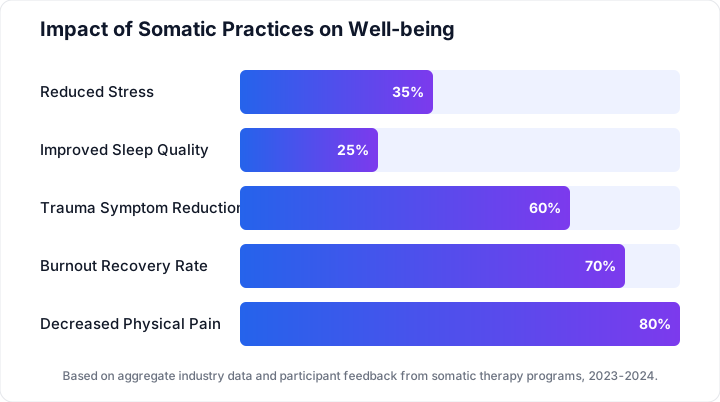
The Numbers Behind Your Calm
- Reduced Stress: Somatic practices can cut perceived stress levels by about 35% in just eight weeks, according to various studies.
- Improved Sleep: People in breathwork programs often report their sleep quality jumped up by as much as 25%. That’s huge for folks with racing thoughts keeping them up.
- Trauma Processing: Around 60% of individuals struggling with past emotional traumas find that somatic therapy really helps reduce how severe their symptoms are.
- Burnout Recovery: For professionals dealing with burnout from demanding work and life, 7 out of 10 say nervous system regulation techniques give them significant relief.
- Physical Symptom Alleviation: Over 80% of clients see a drop in physical stress symptoms like tension and headaches, the kinds of things medication didn’t quite fix.
Charting Your Path to Regulation
Starting somatic breathwork can feel like a huge deal, especially if you’re deep in burnout or struggling with your emotions. But honestly, you’re not alone. We’ve designed this process to be super accessible and gentle, always focusing on your own pace. Learn more about Learn more about related content.
- Initial Consultation: We’ll kick things off with a detailed, confidential chat about your experiences. This usually runs about 30 to 45 minutes. We’ll talk about your specific challenges, whether it’s chronic stress and anxiety messing with your daily life, or those persistent physical symptoms of stress.
- Personalized Assessment: Next, we’ll look at your current nervous system state. Then we’ll discuss how intentional movement can specifically help you regulate your emotions. This means really understanding your triggers and how your body usually reacts, often using tools from Vagal Vibe.
- Foundational Practices: Your first few sessions will focus on gentle movement for chronic stress relief, along with some basic soma breathwork techniques. Our main goal here is to build a sense of safety and presence. That’s key for anyone who feels disconnected from their body and emotional state.
- Gradual Integration: As you get further along, we’ll introduce more complex breath retention therapy and intentional movement practices. The aim is to build your ability to regulate your nervous system. This helps you move past that constant “fight or flight” response.
- Ongoing Support & Refinement: Somatic healing is definitely a journey, not a quick fix. So, we offer ongoing support, tweaking practices as your needs change. This ensures you develop truly effective, long-term coping mechanisms and find lasting stress relief.
Your Online Sanctuary for Somatic Healing
Sure, somatic therapy’s benefits are universal. But the flexibility of online sessions means you get specialized care no matter where you are. It’s truly a personalized, custom experience, bringing expert guidance right to your space. You don’t have to stress about finding local somatic therapy sessions or searching for a somatic practitioner nearby; Vagal Vibe delivers that expertise directly to you. Learn more about Learn more about related content.
This provides a level of comfort and privacy that many people really value, especially when they’re dealing with sensitive stuff like emotional trauma healing. We focus solely on your well-being, giving you a consistent, supportive environment you can access from anywhere. So, whether you’re burned out from a demanding work schedule, or just looking for some holistic stress relief near you, your online, custom sessions are designed for optimal recovery and integration. Learn more about Learn more about related content.
The human nervous system is incredibly adaptive. Research actually shows that consistent, gentle interventions, like somatic therapy, can literally rewire neural pathways. This leads to measurable reductions in chronic stress markers within a few months. It’s really about giving your body the tools to find its way back to balance.
Sustaining Your Somatic Journey
The best part about somatic therapy isn’t just the immediate relief; it’s all the long-term tools you gain for nervous system regulation. After that initial period, which usually involves 3-6 months of consistent engagement, most clients move into a maintenance phase. This doesn’t mean you stop completely. It means you’ve built a super strong foundation.
Many find that a monthly or bi-monthly session helps reinforce new patterns. This is especially true when navigating ongoing life stressors or deeper aspects of emotional trauma. Over one, five, or even ten years, these practices become a natural part of your overall well-being strategy. You’ll learn to spot the subtle signs of an overactive nervous system way faster, and you’ll have practical somatic tools and breathwork right there to reset things. It’s about moving past simply optimizing, and really integrating nervous system regulation. This empowers you to stay calm and resilient on your own. Plus, this ongoing engagement helps you improve body awareness through intentional practice, making self-regulation almost second nature.
Somatic Therapy: Dispelling Common Misconceptions
When people first hear about somatic therapy, they often come in with certain ideas. Let’s clear up a few common myths that might stop someone from exploring this transformative path to healing chronic stress and anxiety in their daily life.
Myth 1: It’s Just "Talking About Feelings" While Moving. While talk therapy definitely has its place, somatic therapy for stress is fundamentally different. It’s not about endlessly dissecting narratives. It’s about connecting with your body’s sensations, which helps directly process past emotional trauma and its physical manifestations. You’re actually learning how intentional movement helps with emotional regulation, not just discussing it.
Myth 2: You Need to Be "Good at Yoga" or Very Flexible. Absolutely not! Intentional movement practices are gentle and can be adapted for anyone, regardless of body type or ability. The focus is always on your internal experience and awareness, never on external performance. It’s about using gentle movement for chronic stress relief, not achieving some specific pose. Exercises for body disconnection and anxiety don’t require advanced physical skills at all.
Myth 3: It’s a Quick Fix. No truly effective healing modality is a quick fix, especially for deep-seated issues like burnout or an inability to calm down. Somatic therapy offers lasting change because it gets to the root, but it requires consistent effort and patience. It’s a process of slowly restoring your rhythm and coming home to yourself through gentle somatic therapy. It’s not a one-time cure.
Myth 4: It’s Only for "Serious" Trauma. While it’s incredibly effective for trauma, somatic body-based therapy for anxiety and everyday chronic stress is just as valuable. It helps with struggling with emotional regulation, those nagging physical symptoms of stress like headaches, and simply feeling stuck in “fight or flight” responses, even if you don’t identify with a capital-T Trauma. Many also find it incredibly useful for improving body awareness through intentional practice in daily life.
Evolving Practices in Nervous System Regulation
The field of nervous system regulation is just exploding right now. We’re seeing a clear shift towards more integrated and accessible approaches. One big development is how much we’re now recognizing the vagal tone secret: the vagus nerve’s massive role in controlling our “rest and digest” functions. Research shows that stimulating this nerve with specific techniques can profoundly impact stress relief and your overall well-being. This has really sparked interest in vagal tone exercises and specific types of breath retention therapy.
Another big trend, especially in online offerings, is the way psychology is blending with body-based practices. This holistic approach acknowledges a critical truth: you can’t just *think* your way out of a body that feels unsafe. You actually have to *breathe* and *move* your way out. We’re seeing more providers, like Vagal Vibe, guide people through their recovery journey with both psychology and Soma Breathwork. They understand the deep connection between mind and body. This allows for tailored solutions for emotional regulation through movement, and better ways to relieve stress-related body pain. It’s perfect for individuals seeking therapy for those chronic stress physical symptoms that medication just doesn’t fully address. This focus on integrated care, often delivered conveniently online, means more people can access the best intentional movement for stress and anxiety.
The Essential Understanding
Honestly, most people overthink the whole path to nervous system regulation. Here’s what it really boils down to: your body already holds the keys to your healing, especially from chronic stress and the lingering effects of emotional trauma. It’s not about forcing yourself to feel better. Instead, it’s about creating the right conditions for your body to naturally find its way back to balance. The Vagal Vibe method, rooted in somatic therapy and soma breathwork, offers a proven way to tap into that innate capacity for calm. So, if you’re struggling with emotional regulation or physical symptoms of stress, learning how intentional movement can help with emotional regulation is a truly empowering step.
Vagal Vibe’s Approach Versus Traditional Methods
When you’re looking at options for stress relief and emotional well-being online, you’ve got choices. But not all approaches tackle the root causes quite like somatic therapy. Here’s a quick look at how Vagal Vibe’s somatic approach stacks up against more conventional methods.
| Aspect | Vagal Vibe’s Somatic Therapy (Online) | Traditional Talk Therapy (Online) | Medication (Pharmacological) |
|---|---|---|---|
| Core Focus | Body sensations, nervous system regulation, processing trauma via physical release. How can intentional movement help with emotional regulation. | Cognitive processing, verbalizing thoughts/feelings, narrative re-framing. | Symptom management, biochemical rebalancing. |
| Mechanism of Action | Gentle movement for chronic stress relief, breathwork (Soma Breathwork), body awareness for anxiety, releasing "stuck" energy. | Verbal communication, insight development, cognitive behavioral techniques. | Altering brain chemistry to reduce anxiety, improve mood, regulate sleep. |
| Engagement Level | Active participation in guided practices, high emphasis on bodily awareness. | Verbal expression and reflection, intellectual engagement. | Passive intake, adherence to dosage. |
| Long-Term Goal | Empowerment through self-regulation, sustainable holistic well-being, freedom from fight/flight cycle. End the cycle of burnout without adding to your to-do list. | Coping strategies, understanding personal history, behavioral change. | Symptom control, potentially for indefinite periods. |
| Burnout Recovery | Directly addresses physical exhaustion and emotional numbness by resetting the nervous system, helping you reclaim your energy. | Offers perspective and coping strategies for work-life balance. | May alleviate severe symptoms like depression or anxiety related to burnout. |
Exploring Related Avenues to Well-being
Understanding your journey to emotional regulation and stress relief often means knowing about related concepts and practices. These aren’t direct Vagal Vibe services, but they can offer important context or complementary insights.
- Vagus Nerve Stimulation: These are techniques or devices aimed at activating the vagus nerve. This nerve plays a critical role in your parasympathetic nervous system and relaxation response. It’s often linked to how effective somatic experiencing can be.
- Polyvagal Theory: This is a neurobiological framework that explains how our autonomic nervous system reacts to safety and threat. It underpins so much of the nervous system regulation work we do. This theory helps explain why we can get stuck in “fight or flight” or “freeze” responses.
- Mindfulness-Based Stress Reduction (MBSR): This is a structured program that uses mindfulness meditation and gentle yoga to help people cope with stress, pain, and illness. It’s one good way to achieve mindful movement practices for stress reduction.
- Trauma-Informed Care: This approach recognizes the widespread impact of trauma and weaves this understanding into every aspect of service delivery. It’s crucial for anyone seeking therapy for chronic stress physical symptoms related to past experiences.
- Neurofeedback: A type of biofeedback that measures brainwaves to train individuals to self-regulate their brain activity. This offers another route to calming an overactive nervous system.
- Holistic Nutrition: This focuses on how your diet impacts your mood, energy, and overall physiological health, providing fundamental support for holistic well-being and stress resilience.
Direct Answers to Your Burning Questions
What exactly is Soma Breathwork?
Soma Breathwork is a specific technique that combines rhythmic breathing, breath retention, and guided meditation. It’s all about activating your body’s natural healing abilities. It helps you reset your nervous system and release stored tension, moving past mere optimization into true integration for nervous system regulation.
How can intentional movement help with emotional regulation?
Intentional movement helps you really tune into your body’s subtle signals, building a stronger mind-body connection. By consciously moving and breathing, you can gently release physical tension linked to emotions, process past emotional trauma, and learn to respond more calmly to stressors instead of just reacting on impulse. This is key to finding effective solutions for emotional regulation through movement.
Is Vagal Vibe suitable for severe burnout?
Yes, Vagal Vibe’s approach, which integrates somatic therapy and Soma Breathwork, is particularly effective for burnout recovery. It really focuses on your body’s physiological response to long-term stress, helping you end that burnout cycle without adding more to your already packed to-do list. You’ll actually reclaim your energy.
What if I feel disconnected from my body?
Feeling disconnected from your body and emotions is super common, especially with chronic stress. Somatic therapy is specifically designed to bridge that gap. With gentle guidance and body awareness practices, you’ll slowly rebuild that crucial connection, easing symptoms like physical tension and chronic pain. Many people actually start right here, finding exercises for body disconnection and anxiety incredibly valuable.
Can this help with poor sleep quality?
Absolutely. Poor sleep quality because your mind won’t shut off is a classic sign of chronic stress. By regulating your nervous system through breathwork and somatic practices, you teach your body to deeply relax. This reduces racing thoughts and encourages a much more restful state. It’s a natural, holistic approach to getting better sleep.
Is this an alternative to traditional therapy?
It’s often complementary. Vagal Vibe offers a holistic approach to mental and physical well-being that goes beyond traditional talk therapy, really focusing on the body’s role in healing. For some, it might be their primary modality. For others, it enhances and deepens insights they’ve gained from talk therapy, especially for those seeking somatic therapy to process past trauma.
Do I need any special equipment for Online sessions?
Usually, you just need a comfy, quiet spot where you won’t be interrupted, a stable internet connection, and maybe a yoga mat or blanket for floor practices. No fancy gear needed to start improving body awareness through intentional practice.

Meet Vagal Vibe
Ready to Reclaim Your Inner Rhythm?
If you’re sick of feeling stuck in “fight or flight,” or battling those physical symptoms of stress that medication just doesn’t quite fix, it’s time to check out a different path. Your journey to nervous system regulation and holistic well-being kicks off with a simple conversation. Get in touch with Vagal Vibe today for a free consultation. Find out how intentional movement can truly help with emotional regulation, and how Soma Breathwork can completely transform your experience, guiding you back to a place of lasting calm and presence. It’s a real chance to invest in your inner peace and reclaim your vitality.