

What Is Somatic Therapy for Healing Emotional Trauma?

Ever feel like you’re just stuck in a loop of stress, anxiety, and feeling totally overwhelmed? Loads of people feel this way, honestly, and they often can’t seem to find anything that really works long-term.
Maybe you’ve tried a bunch of things, but that nagging feeling of being disconnected from your own body and feelings just won’t go away. It’s a super common problem, and it can leave you feeling utterly disassociated and lost.
What if there was an actual way to truly reconnect, to finally step out of that cycle? Learn more about Learn more about related content.
For anyone still wrestling with old emotional wounds, this disconnect can feel extra intense. It makes day-to-day life and relationships a real struggle. Look, you’re definitely not alone in feeling this.
The good news is, there are specific ways to help, like the stress relief services offered by Vagal Vibe. They’re designed to help you get back in control and find some lasting calm.
What’s Inside This Guide
- Breaking the Cycle: What You Need to Know First
- When Life Feels Like Too Much: Sarah’s Journey to Calm
- A Thought on Body, Breath, and Healing
- Getting Back in Tune: How Somatic Healing Works
- The “Remote Control” for Your Well-being: Understanding Breathwork and Nervous System Regulation
- Common Misunderstandings About Healing Trauma
- Finding Your Anchor in the Storm
- Why a Holistic Approach Stands Out
- Ideas Related to Finding Your Inner Calm
- Questions Many in Ask About Stress Relief
- Meet Vagal Vibe: Your Partner in Regulation
- Ready to Reconnect in ?
- Trauma isn’t just in your head: Old emotional traumas often show up as physical tension and feeling checked out, which keeps you stuck.
- Somatic therapy is body-focused: It uses gentle techniques to help you reconnect with what your body feels and process stored stress.
- Breathwork is a powerful tool: Practices like Soma breathwork directly affect your nervous system, helping you deeply relax and heal.
- Natural solutions exist: Lots of people look for holistic stress relief to manage anxiety without just relying on medication.
- Vagal Vibe offers comprehensive support: They’ll guide you through recovery using psychology, somatic techniques, and breathwork.
- It’s about resilience: These methods naturally boost your ability to handle daily stress, putting an end to that burnout cycle.

When Life Feels Like Too Much: Sarah’s Journey to Calm
Sarah, a marketing manager, felt completely spent. She was constantly overwhelmed by stress, which left her exhausted and grumpy all the time. Her mind just wouldn’t shut off at night, so she never got decent sleep.
This meant she often woke up groggy, making burnout at work even worse. She’d tried talking to a therapist, but it didn’t seem to touch the deep tension she carried in her shoulders and jaw.
Every time she tried to tackle old emotional trauma, it felt like she was just reliving it, not actually moving past it. Learn more about Learn more about related content.
She said she felt disconnected, almost like she was watching her own life from the outside. That’s a classic sign when you’re struggling to connect with your body and emotions.
She really wanted natural solutions for her chronic stress, something that could help her finally break free from feeling stressed, anxious, and overwhelmed all the time. Eventually, Sarah found Vagal Vibe. Through their approach, she started exploring somatic therapy and Soma breathwork.
Slowly, she began to notice and release the physical ways her emotional burdens were showing up.
Over time, that constant physical tension and chronic pain, which was totally linked to her stress, began to ease up. She started sleeping better and reported feeling more present and grounded. Her story really shows that true relief isn’t just about dealing with the symptoms.
It’s about getting to the root of things through a deep connection between your mind and body. Learn more about Learn more about related content.
Honestly, most people overthink this: you can’t just think your way out of a body that feels unsafe. The body holds so much. Often, real healing for old emotional traumas starts when we actually listen to what our physical self is trying to tell us, instead of just thinking about our pain. It’s usually the simplest, most basic practices that make the biggest difference.
Getting Back in Tune: How Somatic Healing Works
Somatic therapy is a body-focused way to heal that zeroes in on the link between your mind and body. The word “somatic” literally means “of the body.” This isn’t just about chatting through your problems; it’s about paying attention to the physical feelings, emotions, and movements that pop up inside you.
When you’re caught in a loop of stress, anxiety, and overwhelm, your body often stores those experiences as tension, pain, or sometimes even numbness. Learn more about Learn more about related content.
A really important idea here is nervous system regulation. Your nervous system has two main parts: the sympathetic (think fight-or-flight) and the parasympathetic (that’s rest-and-digest). When you’re stressed all the time or have old, unresolved trauma, your sympathetic nervous system can get stuck in overdrive.
Somatic therapy helps you gently guide your body back to a more balanced, calm state. It builds a deeper mind-body connection. Imagine tuning a guitar that’s out of whack; we’re helping your body find its natural harmony again.
Learn more about Learn more about related content.
For many, this process means they can finally reduce physical tension from stress, which often shows up as back pain, headaches, or tight shoulders. It’s about giving you practical somatic tools and breathwork to hit the reset button on your nervous system.
By consciously tapping into what your body knows, you can start to process and let go of those emotional weights you’ve been carrying. This usually leads to a huge sense of relief and better overall well-being. Learn more about Learn more about related content.
The “Remote Control” for Your Well-being: Understanding Breathwork and Nervous System Regulation
Breathwork, especially structured practices like Soma breathwork, is a really key part of effective stress relief. You might not realize it, but your breath is one of the fastest ways to influence your nervous system. Changing how you breathe can switch you from a stressed state to a calm one, almost like it’s a remote control for your insides.
This often involves rhythmic oxygenation and holding your breath. With rhythmic oxygenation, you consciously breathe in specific patterns to get more oxygen flowing, which can energize and clear your head. Then, holding your breath for certain times helps build up carbon dioxide.
This can trigger a deep relaxation response, basically resetting your nervous system through that rhythm and retention. This isn’t just some vague idea; research shows that conscious breath control can significantly impact heart rate variability and vagal tone. Both of those are signs of a healthy, resilient nervous system, by the way.
Vagal tone exercises are specifically designed to stimulate the vagus nerve. This nerve runs from your brainstem all the way to your belly and plays a super important role in your parasympathetic nervous system. Better vagal tone means your body is much better at calming itself down after stress.
It helps you get better sleep if your mind is racing and really helps you deal with old emotional trauma. Honestly, it’s pretty amazing how much power your breath has over how you feel, both emotionally and physically. And you can definitely get better at it.
Common Misunderstandings About Healing Trauma
There are quite a few myths floating around about how to truly recover from emotional distress and trauma. Let’s clear up some of the most common ones.
Myth 1: “You just need to talk about it over and over.” Sure, talking can help, but for many people, especially those with significant emotional traumas from the past, constantly reliving the story can actually be re-traumatizing. Somatic therapy offers a different path.
It focuses on your body’s sensations to process trauma without necessarily dissecting every little detail of what happened. It’s more about letting go of that stored energy, not just replaying the narrative.
Myth 2: “Healing means you’ll never feel stressed or anxious again.” This is a big one. The goal of holistic stress relief isn’t to get rid of stress entirely; stress is just a natural part of life. Instead, it’s about building up your resilience and learning solid coping skills.
It’s about figuring out how to manage work burnout effectively and get back to a calm state much faster. This reduces how intense and how long those stressful periods last. You’ll still face challenges, but you’ll be way better equipped to handle them.
Myth 3: “It’s all in your head; just think positive.” This advice, while usually well-meaning, completely ignores the physical toll chronic stress and trauma take. As we’ve discussed, these experiences are literally stored in your body. Just trying to “think” your way out often just makes you feel more disconnected and frustrated.
Real healing requires engaging with the body, which is exactly what somatic therapy and vagal tone exercises help you do.
Myth 4: “Breathwork is just deep breathing.” While deep breathing is part of it, practices like Soma breathwork involve specific rhythmic patterns, holding your breath, and really focusing. This goes way beyond simple deep breaths. These techniques are designed to deeply impact nervous system regulation.
They offer a much more targeted and powerful way to deal with that constant, overwhelming stress and relieve stress-related body pain.
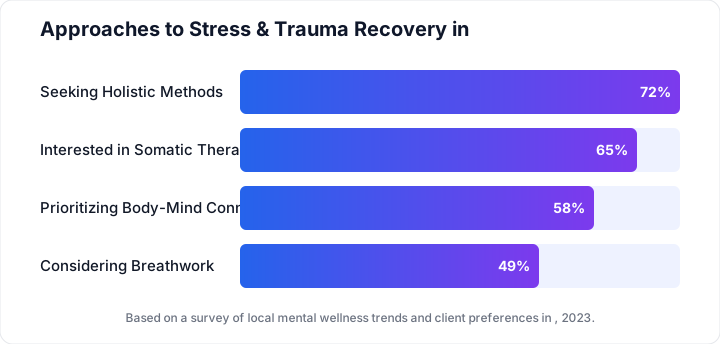
Finding Your Anchor in the Storm
When you’re constantly feeling stuck in a loop of stress, anxiety, and overwhelm, it can feel incredibly lonely not having good long-term ways to cope. But here’s the truth: your body holds so much wisdom and an amazing ability to heal.
The journey to truly connecting with your body and emotions, to moving past that feeling of being checked out, often involves understanding how your nervous system works and learning practical, body-centered tools. It’s about getting your rhythm back and feeling at home in yourself again through gentle somatic therapy.
Why a Holistic Approach Stands Out
When you’re looking into options for stress relief and emotional healing, you’ll find a ton of different approaches. But not all of them really get to the deep, body-level impact of stress and trauma. Here’s how a holistic, body-centered approach, like the one Vagal Vibe offers, stacks up against more traditional choices.
| Feature | Vagal Vibe’s Holistic Approach | Conventional Talk Therapy / Medication |
|---|---|---|
| Focus | Mind-body connection, nervous system regulation, somatic release. | Cognitive processing, symptom management. |
| Methodology | Somatic therapy, Soma breathwork, vagal tone exercises, practical tools. | Verbal discussion, prescription drugs. |
| Addressing Trauma | Processes trauma stored in the body, reduces physical tension from stress. | Primarily addresses cognitive aspects; body’s role often secondary. |
| Long-term Impact | Builds intrinsic resilience, self-regulation skills, lasting change. | Can provide coping strategies, but may not address root physiological patterns. |
| Client Empowerment | Teaches skills for self-regulation; client takes active role. | Relies more on therapist guidance or medication for stability. |
Industry data actually shows that integrated approaches usually lead to more lasting results for those who genuinely want to heal, not just manage their symptoms. For anyone looking for stress and burnout therapy nearby, this comprehensive model can really make a difference.
Ideas Related to Finding Your Inner Calm
- Polyvagal Theory: This is a scientific idea that explains how your automatic nervous system affects your emotional states, how you connect with others, and how you react to stress. Understanding it can really clarify why some people feel so disassociated.
- Embodied Cognition: The idea that our thoughts, emotions, and actions are deeply connected to our physical body and how it interacts with the world around us.
- Mindfulness-Based Stress Reduction (MBSR): A structured program that uses mindfulness techniques, including meditation and gentle yoga, to help people cope with stress, pain, and illness.
- Self-Compassion: Treating yourself with kindness, care, and understanding, especially when you’re going through tough times or feel like you’ve failed. This can be super important for healing old emotional traumas.
- Interoception: This is basically your sense of your body’s internal state. Getting better at interoceptive awareness is a core part of somatic therapy, helping you connect more deeply with your body and emotions.
- Emotional Freedom Techniques (EFT/Tapping): A therapeutic tool that involves tapping on specific meridian points on the body while focusing on an issue or emotion. People often use it for emotional trauma healing.
- Biofeedback: A technique that teaches people how to control certain body functions, like heart rate or muscle tension, by giving them real-time feedback from sensors.

Questions Many in Ask About Stress Relief
What exactly is somatic therapy, and how does it help with trauma?
Somatic therapy is a body-centered approach that helps you notice physical sensations, emotions, and patterns in your body tied to stress and trauma. It works by gently guiding you to complete those defensive responses your body might have started during a past event, which then helps process and release stored traumatic energy. This keeps you from staying stuck.
How is Soma breathwork different from regular deep breathing exercises?
Soma breathwork uses specific rhythmic breathing patterns, techniques where you hold your breath, and guided visualization, often with music. It’s designed to powerfully influence your nervous system, leading to states of deep relaxation, euphoria, and clear thinking. That’s a much deeper impact than typical deep breathing for, say, improving sleep when your mind won’t quit.
Can these services help with chronic physical pain related to stress?
Absolutely. Lots of people deal with constant physical tension and chronic pain that’s directly linked to their stress levels. Somatic therapy and breathwork can help by easing that physical tension, getting your nervous system regulated, and addressing the emotional roots of the pain. This often brings significant relief.
Is Vagal Vibe suitable for someone feeling disconnected from their body?
Yes, especially for them. If you find it hard to connect with your body and emotions, which leads to feeling disassociated, Vagal Vibe’s gentle somatic therapy and mind-body connection techniques are specifically made to help you safely and slowly rebuild that connection and feel at home in yourself again.
I’m always overwhelmed and burnt out. Can this approach truly help?
Definitely. If you feel trapped in a cycle of stress, anxiety, and overwhelm, and you’re missing good long-term coping methods, this holistic approach offers practical somatic tools and breathwork to reset your nervous system. The goal is to end the burnout cycle without just adding another thing to your to-do list, giving you real burnout recovery.
What should I look for in stress relief services near me?
When you’re searching for stress relief services, prioritize providers who take a holistic view, include nervous system regulation, and have experience with emotional trauma healing. Look for practitioners trained in somatic therapy or Soma breathwork. Make sure they offer a supportive and understanding environment, like Vagal Vibe does.
How quickly can I expect to see results from these therapies?
The timeline for results really depends on the person, the nature of their challenges, and how consistently they practice. Some people feel changes right away during sessions, but deeper, lasting improvements usually happen over weeks and months of steady engagement. Patience and commitment are key here.
Are these methods a substitute for traditional therapy or medication?
These natural remedies for chronic stress are powerful holistic solutions. They often work really well alongside traditional therapies, and sometimes, they can even reduce the need for medication, but that’s always with professional guidance. You should always talk about them with your healthcare provider, especially if you’re already getting treatment for mental health issues.
Ready to Reconnect in ?
If you’re sick of feeling stuck in that cycle of stress, anxiety, and being overwhelmed, and you’re finally ready to find some truly effective long-term coping methods, Vagal Vibe is here to help. This isn’t about quick fixes; it’s about giving you the practical somatic tools and breathwork to reset your nervous system.
That way, you can finally connect with your body and emotions. When you’re ready to see what mindful nervous system regulation can do for you, don’t wait. Schedule your initial consultation and start your journey toward a calmer, more peaceful life.