

Regulation vs. Relief: A New Approach to Managing Anxiety

Feeling totally swamped, like you’re just barely keeping your head above water? A lot of us deal with constant fatigue and irritability. That usually comes straight from chronic stress.
It’s not just feeling a bit tired; this is a serious issue that messes with your whole well-being. Learn more about Learn more about related content.
Maybe you’re fighting the slow burn of burnout. Or perhaps old emotional hurts are quietly running your daily reactions. Good news: you can absolutely get your calm back and make your daily life much better.
It’s all about **nervous system regulation**, moving past just quick fixes. Learn more about Learn more about related content.
This approach helps you understand how your body and mind are completely linked. Honestly, it’s a real shift from just getting by to truly living well. We’re talking about deep internal change, not just hiding symptoms. Learn more about Learn more about related content.
What’s Inside This Guide
- The Quick Read: What You Need to Know Now
- Why Stress Management Matters Here, More Than Ever
- Shifting Tides: New Paths in Mind-Body Healing
- A Word from Our Expert
- Decoding Your Inner Command Center
- Understanding the Investment in Your Well-being
- The Real Takeaway for Lasting Calm
- What Happens When Your System Finds Its Rhythm
- Why a Holistic Approach Stands Apart
- Beyond the Basics: Related Concepts for Deeper Understanding
- Straight Answers to Common Questions
- Meet Vagal Vibe: Your Partner in Regulation
- Your Journey Towards Inner Peace Begins Here
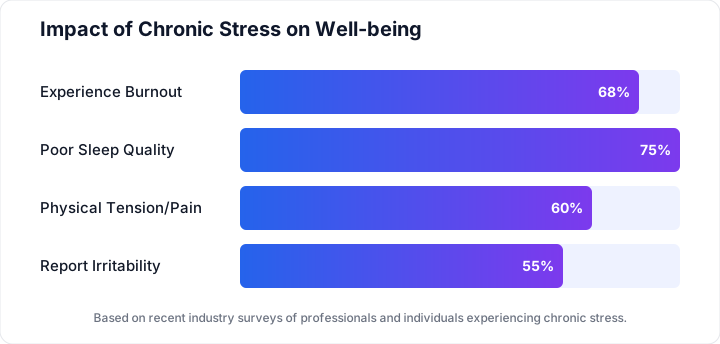
- Burnout is widespread: Nearly 70% of professionals, according to studies, regularly show burnout signs. That cuts down on how effective they are.
- Trauma impacts body: Emotional trauma that hasn’t been dealt with shows up physically. This causes chronic tension and makes your reactions feel out of whack.
- Breathwork is powerful: Simple techniques, like soma breathwork, really help reset your nervous system and relieve stress.
- Holistic approach works: Combining somatic therapy with breathwork gives you a full path to real emotional freedom.
- Regulation is key: True stress resilience comes when your body learns to regulate itself. It’s not just about escaping stressors for a bit.
- Long-term benefits: Better sleep, less irritability, and feeling more connected to your body are common results.

Why Stress Management Matters Here, More Than Ever
Modern life moves fast. Really fast. Many of us are juggling tough jobs, family duties, and a constant stream of digital info.
This high-pressure setup often leaves people feeling completely burned out. You get that extreme exhaustion and a deep, cynical feeling.
You’re not alone if you’ve noticed more stress-related health issues around you. It’s a real problem. Honestly, most people overthink how to handle this stress.
It’s not about stuffing more into your already jam-packed schedule. It’s about finding practical solutions that actually work. That’s why targeted stress relief services in your area are super important.
You build resilience from the inside out. You deal with the actual causes, not just the symptoms.
Even Psychology Today stresses how crucial effective strategies are for managing chronic stress and the toll it takes on your mind and body.
Shifting Tides: New Paths in Mind-Body Healing
The conversation about stress relief is changing. We’re seeing a big move away from just coping and toward deeper, more complete healing. People want natural, whole-person ways to handle anxiety without relying only on medicine. There’s a growing understanding that your emotional state is deeply tied to your physical body.
This means trying out methods that build a strong mind-body link. The trend is moving toward things like somatic therapy and specific breathwork techniques. These can address trauma and stress right down to a cellular level.
It’s about giving people the power to really process past emotional trauma. This creates lasting change, instead of just covering up the pain.
Clients are asking more and more, “Where can I find trauma-informed stress relief?” This shows everyone wants complete solutions. They want approaches that get how complex the mind, body, and past experiences are. Folks are looking for answers for burnout exhaustion that won’t just add another thing to their list. They need something that fundamentally changes how they react to stress.
Your body holds the score; it doesn’t forget, and true healing begins when we learn to listen to its signals and guide it back to safety.
Decoding Your Inner Command Center
At the core of real stress relief is understanding your nervous system. This complex network controls everything: your breathing, your emotions. When you’re constantly buried under chronic stress, your sympathetic nervous system – that’s your “fight or flight” response – can get stuck on overdrive. This often leads to that familiar feeling of being “on edge” all the time.
The goal of nervous system regulation is to beef up your parasympathetic nervous system, especially the vagus nerve. That’s where things like Vagal Vibe’s soma breathwork come in. This isn’t just breathing deeply.
It’s about resetting your nervous system using rhythmic oxygenation and exact breath retention. We’re talking about a science-backed way to calm your entire being.
Somatic therapy, a main part of this approach, uses your body to deal with past emotional trauma. It teaches you to get your rhythm back and feel at home in yourself through gentle, guided movements and awareness. This process helps cut down on physical tension from stress, which often shows up as chronic pain. Those pains are directly linked to your stress levels, you know.
Understanding the Investment in Your Well-being
When you’re checking out holistic stress relief nearby, it’s normal to wonder about the price tag. The cost for good solutions to burnout exhaustion can change a lot. But you should really see this as investing in your long-term health. It’s not just another bill.
Think about what chronic stress already costs you: lost focus, medical bills for stress-related sicknesses, and the wear and tear on your relationships. Those hidden costs can really add up over time. They’re often way more than you’d expect.
Individual sessions or programs focused on nervous system regulation usually run from $150 to $300 per session. That depends on who you see and how long it lasts. Packages for burnout recovery or emotional trauma healing, which typically include multiple sessions over weeks or months, can range from $800 to $3,000 or more. These programs guide you through your whole recovery.
Some providers even offer different pricing levels or group workshops to make these services easier to get. An initial investment might seem like a lot. But the payoff in better health, less anxiety, and a better quality of life is, in our experience, truly priceless. Consider options that fit your budget while still giving you the deep support you need.
The Real Takeaway for Lasting Calm
Ultimately, real calm isn’t about avoiding stress. It’s built on your ability to manage your inner state, no matter what’s happening outside. You can actually end the burnout cycle without adding more to your endless to-do list.
This isn’t a quick fix. It’s a deep change. It means you take back control over your body’s reactions and heal old wounds.
What Happens When Your System Finds Its Rhythm
When you really commit to nervous system regulation, the benefits spread into every part of your life. You won’t just feel a little better; it’s a huge shift in how you can handle the world.
- Reduced Irritability: You’ll notice your short fuse gets much longer. This helps you interact with people more patiently and kindly. Less constant fatigue means you’re generally in a better mood.
- Improved Sleep Quality: Calming an overactive mind actually helps you get deeper, more refreshing sleep. You’ll wake up feeling clearer during the day.
- Enhanced Emotional Resilience: You’ll build a stronger ability to handle life’s tough stuff without stress completely derailing you.
- Alleviated Physical Pain: Many people find relief from that constant physical tension and chronic pain. That pain is often directly tied to their stress levels.
- Greater Self-Connection: With practical somatic tools and breathwork, you’ll feel a stronger link between your mind and body. This brings a sense of being whole.
- Sustainable Energy: Instead of feeling wiped out, you’ll have more consistent, vibrant energy for daily tasks and your own interests.
- Clarity and Focus: A regulated nervous system helps you think clearer and focus better. Your work performance will improve.
- Healing from Within: This gives you a safe, effective way to heal emotional trauma, bringing deep inner peace.
Why a Holistic Approach Stands Apart
When you look for stress and burnout therapy in your area, you’ve got lots of choices. But not all of them are the same. Just treating symptoms, like only using medication, often misses the real problems.
Vagal Vibe’s integrated method offers something different. It focuses on lasting change, not just temporary relief.
| Feature | Vagal Vibe’s Holistic Approach | Traditional Coping Methods |
|---|---|---|
| Core Focus | Nervous System Regulation & Trauma Healing | Symptom Management & Short-Term Relief |
| Techniques | Soma Breathwork, Somatic Therapy, Psychology Principles | Distraction, Medication (sometimes), Generalized Relaxation |
| Long-Term Goal | Empowered Resilience, Self-Regulation, Emotional Freedom | Reducing Immediate Discomfort, Maintaining Status Quo |
| Client Engagement | Active Participation, Body-Centered Awareness, Deep Processing | Passive Intake, Superficial Strategies, External Reliance |
| Sustainability | Builds Innate Capacity for Self-Healing | Requires Continuous External Intervention |
Traditional methods might give you some calm for a bit. But they often don’t address deep subconscious patterns. And they rarely help you really improve sleep when your mind is overactive.
Our integrated approach uses both psychology and soma breathwork. It guides you through recovery, making it a powerful choice if you’re truly looking to get your rhythm back.
Beyond the Basics: Related Concepts for Deeper Understanding
- Vagal Tone Exercises: These are specific practices designed to perk up your vagus nerve. They make it better at handling stress and helping you relax.
- Polyvagal Theory: This is a neuroscience idea that explains how your vagus nerve affects your arousal levels and how you connect with others. It’s key to understanding nervous system regulation.
- Breath Retention Therapy: These advanced breathwork techniques involve holding your breath at specific times. This helps your body use oxygen better and changes how your nervous system acts.
- Neuroplasticity: Your brain is amazing; it can rewire itself by forming new connections. This means you can literally change your stress reactions.
- Interoception: This is your sense of what’s happening inside your body—like your heart rate, breathing, and digestion. Boosting interoception is crucial for somatic healing.
- Trauma-Informed Care: This approach recognizes how much trauma affects people. It puts that understanding into every part of practice, making sure you feel safe and empowered.

Straight Answers to Common Questions
What makes nervous system regulation different from just “stress management”?
Traditional stress management often focuses on coping strategies for symptoms, like deep breathing or meditation. Nervous system regulation, on the other hand, aims to totally reset your body’s stress response. It teaches your body to get out of “fight or flight” mode more easily. It’s a deeper, more lasting change.
How does soma breathwork help with burnout recovery?
Soma breathwork uses rhythmic breathing and holding your breath to deeply oxygenate your body and quiet your mind. This process helps rebalance your autonomic nervous system. It effectively pulls you out of that constant stress response that defines burnout. It’s a powerful way to get your energy and clarity back.
Can somatic therapy really help with past emotional trauma?
Yes, absolutely. Somatic therapy works because trauma is stored in your body, not just your mind. It uses gentle, body-focused techniques.
This helps you process and release that stored traumatic energy. It lets you deal with past emotional trauma safely, with guidance, fostering real healing.
I feel disconnected from my body. Can these methods help?
Many people with chronic stress or trauma feel like they’re not connected to their bodies. Both soma breathwork and somatic therapy are designed to rebuild that mind-body connection. They give you practical somatic tools and breathwork to reset your nervous system. This helps you feel more grounded and present.
How long does it take to see results with nervous system regulation?
The timeline is different for everyone. But many clients feel small changes within just a few sessions. Deeper changes, especially for burnout recovery or emotional trauma healing, usually take several weeks or months of regular practice.
It’s a journey, not a race. It really depends on your unique situation.
Is this a natural remedy for chronic stress, or is it more involved?
It’s definitely a natural, whole-person approach, focusing on your body’s own healing power. It’s more involved than just taking a pill, though, because it needs you to be active and practice consistently. However, it gives you a powerful, sustainable alternative to just relying on outside help. It really boosts your overall well-being.
Can these techniques help me reduce physical tension from stress?
Absolutely. Chronic stress often shows up as persistent physical tension and pain. Somatic therapy directly tackles this by helping you notice and release those stored tensions. When you combine that with the calming effects of breathwork, you’ll find significant relief in your body.
Your Journey Towards Inner Peace Begins Here
If you’re ready to escape that endless cycle of stress, fatigue, and irritability, you’ve got a clear path forward. Choosing to move from just surviving to truly thriving is a decision you can make right now. It’s about investing in a healthier, stronger you. Don’t let chronic stress run your life any longer; real, long-term coping methods are out there.
To see how soma breathwork, somatic therapy, and nervous system regulation can change your well-being, visit Vagal Vibe. Start your journey toward lasting peace and a full sense of well-being today. Your inner rhythm is just waiting to be restored.