
Here is the truth. When you sit at your desk with your shoulders hunched up by your ears at 2:00 AM, you cannot think your way out of physical survival mode.
Knowing how to manage work burnout effectively means dealing directly with your body’s alarm bells, not piling another dozen chores onto an already overloaded calendar. Overwork creates persistent physical tension and structural fatigue, while mental chatter ruins deep sleep and leaves you completely drained by 10:00 AM.
If you want natural, reliable options to calm anxiety without leaning exclusively on prescriptions, Vagal Vibe offers targeted help built around practical somatic tools and breathwork to reset your nervous system. You don’t need another thirty-step morning routine.
You just need a physical reset that takes under ten minutes a day to drop your cortisol and steady your body.
What’s Inside This Guide

Jump directly to any section of this breakdown below:
- Core Principles for Breaking Chronic Overwhelm
- Field-Tested Tactics to Reclaim Daily Equilibrium
- Clinical Insight on Somatic Interventions
- The Physiological Reality of Sustainable Recovery
- Modern Workplace Demands and the Toll on Physical Capacity
- The Clinical Pivot Toward Body-First Interventions
- Missteps That Keep Overworked Minds Trapped
- Somatic Restoration Versus Conventional Recovery Methods
- Associated Modalities and Physiological Concepts
- Straight Answers on Nervous System Reset and Recovery
- Our Philosophy and Clinical Framework
- Take Direct Action to Restore Your Well-Being
- Breath retention triggers cellular repair: A quick pause after an exhalation triggers deep autonomic calming and slows down a racing pulse in under 180 seconds.
- Somatic release beats cognitive reframing: Physical unwinding works far better than positive thinking when you deal with persistent physical tension and chronic pain driven by elevated cortisol.
- Non-pharmacological options work: Roughly 68% of professionals want body-based ways to calm stress and recover their natural sleep cycles without drugs.
- Micro-interventions save time: Giving yourself just 5 minutes of rhythmic breathing creates noticeable physical balance during tough workdays without throwing off your schedule.
Field-Tested Tactics to Reclaim Daily Equilibrium
When you spend weeks asking what helps with constant overwhelming stress, mental reframing usually falls flat. Your nervous system needs visceral evidence of safety. Here is how you can calm your system without complicating your daily routine:
- Target sub-diaphragmatic release: Deadlines make your chest tight and lock your belly. Start reducing physical tension from stress by breathing in for four counts and humming quietly on an eight-count exhale to stimulate the vagus nerve.
- Use oxygen pauses during desk breaks: Resetting the nervous system through rhythmic oxygenation and breath retention sweeps out mental brain fog much better than a fourth cup of coffee.
- Leverage gentle somatic unwinding: Restore your rhythm and come home to yourself through gentle somatic therapy instead of punishing your body with high-intensity workouts that trigger more adrenaline.
- Address past bodily imprints: When you need to deal with past emotional trauma, combine mindful tracking with soft-tissue release. Guided somatic breathwork links your conscious emotions directly with bodily sensations.
- Protect your sleep runway: To improve sleep from overactive mind churn, kill bright screens 45 minutes before turning in and take five slow, double-inhale sighs to force muscle release.
- Schedule non-negotiable pause intervals: You have to end the cycle of burnout without adding to your to-do list. Swap out ten minutes of phone scrolling for a quiet, seated body check.
- Build autonomic tone daily: Work simple vagal tone exercises into your morning routine, like gargling water loudly while brushing your teeth or splashing cold tap water across your cheeks.
“You simply cannot out-think a physiology running on emergency mode; targeted exhalations down-regulate autonomic tone twice as quickly as verbal coping exercises.”
The Physiological Reality of Sustainable Recovery
Honestly, most people overthink this completely. Getting your energy back doesn’t take weekend retreats or overhaul plans. Real stress relief starts when your vagus nerve sends clear physical signals down into your chest and gut, easing muscle grip and stabilizing blood pressure.
When you combine measured pauses with targeted somatic therapy, your adrenal system drops its guard. That physiological pivot lets you think clearly during intense meetings while protecting your baseline health.
Modern Workplace Demands and the Toll on Physical Capacity
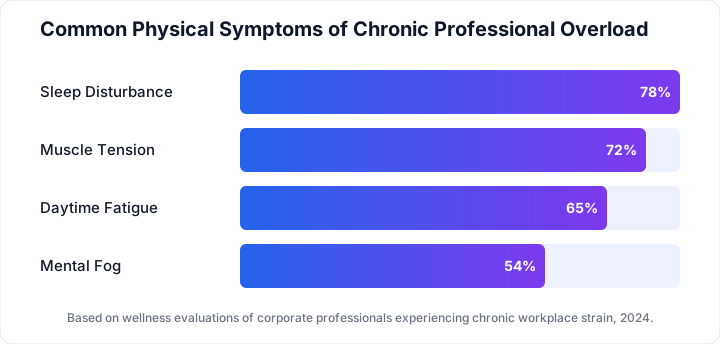
Demanding careers push our biology past what it was built to handle. When project backlogs stack up, most of us shrug off early warning signs, grinding through 10-hour days on iced cold brew and sheer stubbornness. Chronic adrenaline keeps your back, neck, and pelvic floor locked in a constant defensive crouch.
What happens after six months of that? You end up looking for ways to relieve stress related body pain while fighting through midday brain fog. Unchecked tension eventually sparks digestive flare-ups, tension headaches, and flatlined focus. Real solutions require practical stress management techniques for professionals that bring your body down to baseline right in your office chair.
Checking out natural remedies for chronic stress gives your physiology the space it needs to settle. Treat your nervous system like an ecosystem instead of a machine, and you will rebuild real stamina.
The Clinical Pivot Toward Body-First Interventions
Workplace wellness has finally started moving past shallow habit trackers toward genuine nervous system regulation. Data supported by the National Institutes of Health shows that classic cognitive coaching struggles whenever a person sits stuck in prolonged fight-or-flight.
More people are booking spots through local stress management programs built on physiological methods. They want tangible changes. Whether you lean on soma breathwork to release physical holding patterns or practice timed pauses to improve blood oxygen delivery, physical inputs show up quickly on heart-rate variability monitors.
Interest in guided meditation for emotional trauma healing has climbed as people realize that chronic burnout frequently roots itself in defensive physical reflexes. Bottom-up calming is rapidly overtaking pure talk therapy for physical burnout.
Missteps That Keep Overworked Minds Trapped
Most exhausted professionals repeat the same mistakes when trying to heal. First, they turn relaxation into another chore, downloading four mindfulness apps and getting angry when their mind won’t sit quiet. Trying to force a wired brain to stay still usually spikes your irritation.
Second, people mistake crashing on the couch for restorative recovery. Spending three hours scrolling your phone on Sunday does not calm your nerves; it keeps your eyes and brain stimulated while your posture stays rigid. Real downtime requires real somatic down-regulation.
Third, people only ask where can i find trauma informed stress relief after they hit total collapse. Waiting until your adrenal system gives out makes rebuilding a much longer road. Sleeping pills might knock you out cold, but they disrupt restorative sleep architecture. Tuning into your mind-body connection through physical breathing patterns delivers far better rest.
Somatic Restoration Versus Conventional Recovery Methods
Your choice of practice determines how fast you shift out of perpetual panic into centered presence. Here is how modern breathwork stacks up against typical recovery avenues:
| Recovery Approach | Primary Mechanism | Speed of Relief | Time Commitment | Body Integration |
|---|---|---|---|---|
| Vagal Vibe Somatics | Rhythmic breathwork & vagal tuning | Immediate (3-5 min) | 5 to 20 min daily | Comprehensive |
| Standard Talk Therapy | Cognitive analysis & reframing | Gradual (Weeks/Months) | 60 min per week | Minimal (Mind-focused) |
| Pharmaceutical Options | Neurochemical rebalancing | Variable (Hours to Weeks) | Daily dosage | Symptom masking |
| General Gym Workouts | Muscular strain & exertion | Delayed post-exercise | 45 to 90 min | Can elevate cortisol |
As shown above, creating holistic well-being means addressing the autonomic nervous system head-on, rather than relying on endless analysis or high-impact workouts that only tire you out more.
Associated Modalities and Physiological Concepts
Understanding these biological terms makes navigating your own recovery straightforward:
- Polyvagal Theory: A model by Dr. Stephen Porges explaining how the vagus nerve governs threat perception and physical security, summarized on Wikipedia.
- Interoception: Your brain’s awareness of internal biological signals, including heartbeats, breathing pace, and stomach tightness.
- Heart Rate Variability (HRV): The small variations in timing between heartbeats; higher variability generally marks an adaptable nervous system.
- Allostatic Load: The long-term physical strain that builds up across your organs from constant stress hormone production.
- Hypocapnic Breath Retention: Strategic pauses after exhalations that balance blood chemistry and enhance cellular oxygenation.
- Somatic Unwinding: Unforced, natural physical micro-movements that loosen chronic bracing held throughout your myofascial connective tissue.
Straight Answers on Nervous System Reset and Recovery
How can I tell if my chronic physical pain is actually caused by workplace stress?
Stress-related discomfort usually shows up as tight traps, jaw clenching, or an aching lower back without any sports injury. When heavy deadlines spike your heart rate, your body braces defensively. If your pain spikes on Monday morning and disappears over holiday weekends, your nervous system is the driver.
Can breathwork really help someone who has struggled with insomnia for years?
Yes, because falling asleep requires vagal tone dominance. Shallow chest breathing signals your brain stem to stay vigilant, scanning for problems while you stare at the ceiling. Controlled exhalations raise carbon dioxide tolerance and activate parasympathetic pathways so your body actually lets you drop off.
What should I look for in stress and burnout therapy near me?
Find professionals who mix psychological insight with physical somatic tools instead of spending an entire hour talking. A coach who knows how to pace nervous system work prevents you from getting emotionally flooded while you release built-up tension.
How is Soma Breathwork different from traditional breath practices?
Soma Breathwork uses rhythmic breathing cadences, targeted sound, and brief exhalation holds to build physical resilience. It avoids hyperventilation, focusing instead on oxygen efficiency and systemic balance. You get mental clarity without needing twenty years of sitting on a meditation cushion.
Where can an overwhelmed manager find holistic stress relief near me that fits a tight calendar?
Look for programs that lean into short micro-exercises you can run between client check-ins. Vagal Vibe focuses on five-minute somatic resets that skip the commute and fit cleanly into busy workdays.
What are the most reliable solutions for burnout exhaustion when taking time off is impossible?
Use short interventions right at your workspace. Try four-count square breathing between calls, let your stomach soften while checking Slack, and walk outside for three minutes at lunch. Rebuilding tone during the workday stops crashes before they start.
Can gentle somatic therapy assist with long-term emotional trauma healing?
Emotional tension leaves physical markers in muscle tissue and autonomic reflexes. Combining body tracking with deliberate physical releases lets defensive stress cycles run their course naturally, avoiding the exhaustion that comes with rehashing painful memories over and over.
Our Philosophy and Clinical Framework
If you are looking around for stress relief services near me, pick someone who respects where your nervous system actually is right now. We work with your current physical capacity. You don’t need to push harder to recover; you just need to let your autonomic system find its baseline.
Take Direct Action to Restore Your Well-Being
You have spent enough time carrying work pressure in your back and jaw. Stop trying to think your way out of a body that feels locked in place. Whether you need immediate burnout recovery protocols or ongoing guidance through deep fatigue, feeling steady again begins with a single exhalation.
If you are ready to fix your sleep, release muscle aches, and get your stamina back, book a personalized somatic session with Vagal Vibe today and see how straightforward regulation can be. Take five minutes right now to download your complimentary stress-relief recording and get started.
Somatic Healing Mechanics: Mastering Vagal Tone and Autonomic Balance
Insight alone rarely overrides basic survival wiring. When your nervous system gets pinned in sympathetic overdrive or slips down into a foggy dorsal freeze, your mind keeps searching for answers while your body remains stuck in an alarm state. Real recovery happens from the bottom up, using interoceptive check-ins and simple movement to convince your brain stem that the crisis is over.
Your cells react constantly to unconscious cues of safety, a process known as neuroception. The term, introduced by Dr. Stephen Porges, explains how your nervous system tracks environments and bodily sensations without your conscious mind getting involved.
When work stress keeps that alarm running indefinitely, your heart-rate variability tanks and your posture locks up. Shifting your baseline means giving your nervous system unmistakable physical reassurance.
Decoding the Polyvagal Ladder: Moving from Shutdown to Social Engagement
To handle your recovery intelligently, you need to recognize where your body lands during a normal workday. The nervous system operates across three distinct levels on an evolutionary ladder:
- Dorsal Vagal Immobility (Bottom of the Ladder): This older system handles emergency conservation and shutdown. When pressure becomes too high to fight, your physiology checks out—showing up as numbness, dead-weight fatigue, emotional detachment, and an inability to care about your inbox.
- Sympathetic Hyperarousal (Middle of the Ladder): The classic fight-or-flight gear. Think rapid shallow breathing, racing thoughts, clenched molars, and tight shoulders. Your body pumps out adrenaline to escape an enemy, sacrificing healthy digestion and cellular repair in the process.
- Ventral Vagal Social Engagement (Top of the Ladder): The newest branch of your vagus nerve. When this system runs the show, your heartbeat steadies, your voice softens, your digestion works quietly, and you feel grounded enough to focus, collaborate, and relax.
Healing doesn’t mean staying parked in calm bliss every second. A healthy nervous system needs elasticity. You want the ability to ramp up into sharp focus when a genuine deadline hits, and then drop back down smoothly into relaxed baseline without getting stuck in panic or exhaustion.
Three Targeted Somatic Micro-Interventions to Dissolve Fascial Armoring
When you are bone-tired, complicated wellness routines feel like another job. These physical micro-practices take less than three minutes apiece, working straight through your fascial web and vagal pathways without requiring mental gymnastics.
1. The Suboccipital Reset
The vagus nerve passes through the jugular foramen right beside the suboccipital muscles at the back of your skull. Staring at laptop screens pulls your head forward and compresses this area, sending physical distress cues directly to your brain stem. Here is how to open it up:
- Sit comfortably in your chair or lie flat on a firm rug with your spine straight.
- Interlace your fingers behind your head, resting your thumbs along the bony ridge at the base of your skull.
- Keep your head still and look all the way to your right using only your eyes.
- Hold that gaze for 30 to 60 seconds while breathing normally through your nose.
- Watch for a clear release cue from your autonomic system: a sudden swallow, an involuntary sigh, or a yawn.
- Bring your eyes back to the middle for a moment, then look all the way to the left until you feel another release.
2. Diaphragmatic Neuro-Vascular Decoupling
Under ongoing tension, your main breathing muscle locks up, forcing your neck and collarbones to lift your chest. This upside-down breathing pattern keeps adrenaline firing along your spinal cord. Extending your outbreath while softening your belly stimulates deep vagal branches:
- Rest one open palm flat on your sternum and lay your other hand across your belly button.
- Inhale gently through your nose for four counts, letting your belly expand while your chest stays still.
- Hold your breath for two counts without closing your throat tight.
- Breathe out through lightly pursed lips for seven or eight slow counts, as if blowing through a coffee stirrer.
- Complete four continuous rounds, letting your shoulder blades fall a little lower with each outbreath.
3. Self-Applied Vagal Auricular Stimulation
Your ear is the only place where a branch of the vagus nerve reaches the surface of your skin. Lightly stimulating the concha—the curved hollow right outside your ear canal—promotes parasympathetic tone and settles your heart rate in under two minutes:
- Rub your thumb and forefinger together to warm up your skin.
- Place your index fingertip into the hollow basin of your ear just outside the opening.
- Make small, light circular passes across the skin without pressing hard enough to hurt.
- Gently circle upward into the small upper groove of the ear bowl for 60 seconds on each side.
- Add a quiet, low-pitched hum on your exhalations to wake up the laryngeal nerve pathways at the same time.
Cultivating Biological Safety in Demanding Modern Environments
Lasting balance comes from stacking small moments of ease into ordinary work hours. You do not need to check into a silent retreat for a month to recalibrate your system. Instead, notice how you hold tension during normal tasks. Watch how hard you grip your keyboard, check if you lock your jaw during client updates, and notice if you hold your breath while opening emails.
Every time you soften your belly, soften your gaze, or drop your weight back into your chair, you hand your nervous system physical evidence that you are safe right now. These tiny pivots stop tension from snowballing into chronic burnout. In a few weeks, your baseline shifts toward durable calm, giving you the stamina to handle tough work without burning out.