
How to Integrate Vagal Tone Exercises for Daily Stress Resilience

Feeling totally swamped by chronic stress and anxiety lately? You’re not alone. Lots of folks are hitting burnout, struggling with exhaustion, cynicism, and just feeling less effective.
Honestly, it often feels like you’re stuck in a loop, right? What if you could actually break that pattern? We’re talking about real, down-to-earth ways to build inner strength. Learn more about Learn more about related content.
This includes concrete strategies for a resilient work culture, even if you work remotely, and finding the best ways to build a supportive team culture starting within yourself.
What’s Inside This Guide
- The Quick Read on Stress Resilience
- Our Bodies, Our Stories: Healing Traumas
- Finding Your Calm Center
- Understanding the Vagus Nerve Connection
- Sustaining Your Calm: A Long-Term Approach
- Investing in Your Inner Peace: What to Expect
- Common Missteps on the Path to Regulation
- The Science of Soma: Breathwork and Body Awareness
- Transformative Gains: Beyond Just Feeling Better
- Vagal Vibe’s Unique Approach vs. Traditional Methods
- Beyond the Basics: Related Wellness Concepts
- Burning Questions About Somatic Healing
- Getting to Know Vagal Vibe
- Ready to Reclaim Your Calm?
- Vagal Tone Boost: Simple exercises, like deep breathing and humming, can activate your vagus nerve. This directly improves your body’s ability to manage stress.
- Trauma-Informed Care: Many people struggle with old emotional traumas. Somatic therapy offers a body-centered way to process and release these, without just talking them out.
- Burnout Recovery: For those feeling totally exhausted and cynical, nervous system regulation therapy helps reclaim energy. It reduces that “stuck in fight or flight” feeling.
- Sleep Transformation: Bad sleep from an overactive mind is a huge problem. Intentional vagal tone exercises can seriously calm your nervous system for better rest.
- Holistic Anxiety Management: Instead of only medication, blending somatic bodywork for stress relief and breath retention therapy gives natural, lasting anxiety solutions.
- Mind-Body Connection: Getting back in touch with your body’s signals helps ease physical symptoms like tension and chronic pain. This moves you past simple symptom management.

Our Bodies, Our Stories: Healing Traumas
It’s not just your mind carrying all that stress and past baggage. People are often haunted by old emotional traumas. These can impact daily life and relationships, and they might not even realize how much.
Industry data shows a big chunk of adults experience adverse childhood experiences (ACEs). These often lead to chronic health issues later on.
And it’s not just about huge, dramatic events. Even small, everyday stresses can add up over time.
Your body, you see, holds a story. It remembers everything you’ve ever gone through. That’s why so many of us suffer from constant physical tension and chronic pain directly linked to our stress levels.
These aren’t just “in your head”—they’re very real physical signs of an overwhelmed nervous system. Unfortunately, traditional methods usually miss this crucial mind-body connection. This leaves people feeling unheard, like they haven’t been cared for properly.
Research points to a growing demand for holistic ways to manage anxiety, moving away from just medication. This shift means we’re starting to understand that real healing often needs to address the body’s role in stress and trauma. We’re getting beyond just thinking our way through things; we’re now integrating our physical and emotional selves.
Finding Your Calm Center
Look, if you’re stuck in a loop of stress, anxiety, and overwhelm, and you lack good long-term coping mechanisms, the main problem is probably an unregulated nervous system. True, lasting calm isn’t about ignoring stuff or just “thinking positive.” It’s about teaching your body to feel safe again.
“When your body feels unsafe, your mind can’t truly relax; it’s a physiological reality that the body often needs to ‘breathe its way out’ of trauma and stress, rather than simply ‘thinking its way out’.”
Sustaining Your Calm: A Long-Term Approach
So, you’ve started feeling better with nervous system regulation therapy? That’s awesome! But what does it take to keep that calm going over the long haul?
Just like any new skill, being consistent is key. Think of it less as a quick fix and more like building a new physical habit for your body.
In our experience, clients usually notice initial shifts within a few weeks of regular practice. This might mean improved sleep or less irritability. Over three to six months, these practices often bring much deeper changes, like better emotional regulation and a big drop in chronic physical symptoms.
Some people even see changes in how they approach team culture, finding they have more patience and clarity in their interactions.
Keeping these benefits means weaving practical somatic tools and breathwork into your daily routine. This isn’t about adding another chore. Instead, it’s about small, intentional acts of self-care.
It could be a 5-minute soma breathwork session first thing in the morning, or a quick body awareness exercise before a big meeting. These practices become your personal reset button, helping you restore your rhythm and come back to yourself.
Investing in Your Inner Peace: What to Expect
Many clients wonder about the money involved in truly tackling chronic stress and anxiety. Let’s be clear: this isn’t a one-size-fits-all thing, and costs change depending on how much support you need. Typically, initial Online Consultations for somatic therapy near you, which include an assessment and a personalized plan, might run from $150 to $300.
Ongoing Virtual Session packages, especially for deep emotional trauma healing or burnout recovery, usually range from $600 for a basic series of 4-6 sessions to over $2000 for more extensive, long-term support. The good news is that investing in your overall well-being often pays off big time. Think fewer healthcare costs, better productivity, and just a higher quality of life all around.
What makes the price go up or down? Factors include the practitioner’s experience, the specific methods they use (like advanced breath retention therapy), and how long you commit. Remember, you’re investing in a skillset for how to calm an overactive nervous system, not just a temporary fix.
It’s about giving you strategies for reducing physical tension from stress and getting better sleep quality for years to come.
Common Missteps on the Path to Regulation
Starting your journey into nervous system regulation is exciting, but it’s easy to fall into typical traps. One big mistake is trying to “power through” it. People treat somatic healing like just another item on their to-do list.
But your body doesn’t respond well to force. This isn’t about pushing harder; it’s about listening more closely.
Another pitfall is expecting instant, dramatic results. While some changes can happen quickly, especially with effective vagal tone exercises, true emotional trauma healing and integrating new patterns takes time. People often quit too soon.
They think it “isn’t working” because they haven’t had some Hollywood-movie-style epiphany after one session. It’s a gradual process.
Finally, ignoring the role of a qualified somatic practitioner in your area is a mistake. There are tons of resources explaining what somatic therapy is for stress, but trying to go DIY can sometimes lead to frustration or even re-traumatization if you don’t handle it with care. An expert can guide you.
They make sure you’re not just coping, but truly healing and finding real solutions for burnout exhaustion.
The Science of Soma: Breathwork and Body Awareness
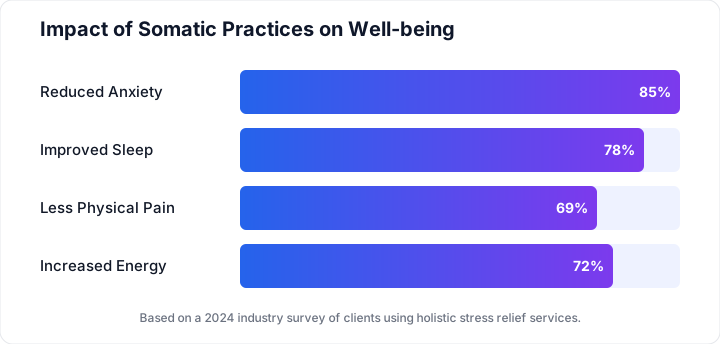
When we talk about somatic therapy for emotional trauma release, we’re really looking at the cool mechanics of your body. At its heart, it’s about working with your autonomic nervous system. That’s the automatic control center for things like heart rate, digestion, and how you react to stress.
The vagus nerve, sometimes called the “wandering nerve,” is a huge player here. It’s the longest cranial nerve, connecting your brain to many vital organs, and it’s super important for your body’s ability to relax.
Soma breathwork, a technique we use at Vagal Vibe, uses rhythmic breathing, music, and breath retention. This helps influence your vagal tone, which is how active your vagus nerve is. A higher vagal tone means your body can more easily switch from “fight or flight” into a calmer, more restorative state.
This is crucial for easing stress-related body pain and boosting overall health, according to studies published in the journal ‘Frontiers in Psychology’.
Somatic body-based therapy for anxiety also includes body awareness exercises and gentle movement. This isn’t just stretching. It’s about learning to feel sensations, understand your body’s signals, and release trapped tension. It’s how you go beyond just optimizing and really integrate for nervous system regulation, building a deep mind-body connection to cut down on chronic stress.
Transformative Gains: Beyond Just Feeling Better
Getting into somatic healing services near you isn’t just about temporary relief. It’s about deep, lasting transformation. The good things spill over into every part of your life, offering more than you might first expect.
- Deepened Calm: You’ll find practical somatic tools and breathwork to reset your nervous system. This means you’ll feel calmer more often, even when daily life is chaotic.
- Burnout Reversal: For those hitting burnout, these techniques help you break the cycle without adding more to your plate. You reclaim your energy and passion.
- Trauma Release: Learn how somatic therapy helps regulate emotions and process old emotional traumas. This leads to a feeling of freedom and lightness you might not have felt before.
- Restorative Sleep: Say goodbye to bad sleep caused by a racing mind. You’ll get strategies to calm an overactive nervous system, leading to deeper, more restful sleep.
- Physical Ease: Discover somatic therapy to reduce tension. This can ease chronic physical pain and discomfort often linked to unresolved stress.
- Empowered Regulation: You’ll develop better emotional regulation. This means moving past being overwhelmed by your feelings to actually understanding and guiding them.
- Authentic Connection: Reconnect with your body and emotions. This builds a sense of wholeness and improves your relationships with yourself and others.
- Natural Relief: Find natural stress relief and anxiety management methods. They offer an alternative or an addition to medication.
- Increased Resilience: Build your inner strength. This makes you more adaptable and resilient when facing life’s inevitable challenges, instead of feeling trapped in “fight or flight.”
Vagal Vibe’s Unique Approach vs. Traditional Methods
When you’re looking for stress relief services near you, you’ll see a bunch of options. It helps to grasp how a somatic approach, like the one at Vagal Vibe, stacks up against more traditional routes.
| Feature | Vagal Vibe (Somatic Approach) | Traditional Talk Therapy |
|---|---|---|
| Focus | Body-centered, nervous system regulation | Cognitive processing, verbal expression |
| Trauma Handling | Releases trauma stored in the body | Processes trauma through narrative |
| Physical Symptoms | Directly addresses and alleviates physical tension, pain | Indirectly addresses physical symptoms via mental processing |
| Methodology | Breathwork, gentle movement, body awareness | Verbal discussion, interpretation, reframing thoughts |
| Empowerment | Teaches practical self-regulation tools (e.g., vagal tone exercises) | Offers insights and coping strategies |
Traditional talk therapy is super valuable for many people. But it sometimes doesn’t quite hit the mark for individuals who find it tough to connect with their bodies and emotions. Or for those whose stress really shows up as physical symptoms. The Vagal Vibe method provides a tangible, body-first path, offering strategies for how to manage work burnout effectively and boost overall well-being.
Beyond the Basics: Related Wellness Concepts
Learning about nervous system regulation often opens doors to many other practices and ideas. These can really support your journey to feeling better. They aren’t just buzzwords. They’re key parts of a truly holistic way to improve your well-being.
- Polyvagal Theory: This brain science theory explains how our autonomic nervous system affects our emotions, how we engage socially, and our stress responses. It’s fundamental to knowing how to calm an overactive nervous system.
- Mindfulness Practices: Techniques like meditation and mindful breathing help you stay present. They let you observe your thoughts and sensations without judgment. This complements body awareness for anxiety.
- Neuroplasticity: This is your brain’s amazing ability to change itself by forming new connections. Doing vagal tone exercises can actually help rewire your brain for more calm and resilience.
- Emotional Intelligence: This is your capacity to understand and manage your own feelings, and to sense and influence others’ feelings. Better nervous system regulation directly improves your emotional intelligence, helping with what improves emotional regulation in teams.
- Interoception: This is your sense of what’s happening inside your body, like hunger, thirst, or heart rate. Developing interoception is crucial for somatic movement, helping with body disconnection and spotting early signs of stress.
- Stress Inoculation Training: A psychological technique that prepares people to handle stressful situations better. It does this by exposing them to controlled amounts of stress, combined with coping skills.

Burning Questions About Somatic Healing
What exactly is nervous system regulation?
Nervous system regulation is all about helping your autonomic nervous system shift from high-alert states (like fight, flight, or freeze) to states of calm and connection. It teaches your body to respond to stress more flexibly, instead of getting stuck in constant tension. This often involves specific vagal tone exercises.
Can somatic therapy really help with past emotional trauma?
Yes, absolutely it can. Somatic therapy for emotional trauma release works by tackling the physical sensations and patterns where trauma gets held in the body. It’s not just about talking about the memory. This allows for a deeper, more complete processing and release, going beyond what traditional talk therapy might achieve alone, especially for those haunted by past emotional traumas.
How quickly can I expect to see results from these practices?
Many people say they feel a noticeable difference in their stress levels and sleep quality within a few sessions of trying somatic body-based therapy for anxiety. However, deeper changes, like healing from burnout or complex trauma, usually take several weeks to months of consistent practice. Honestly, it really depends on where you’re starting from and how committed you are.
Is Vagal Vibe’s service suitable for remote professionals?
Definitely. All our sessions, including soma breathwork and local somatic therapy sessions (virtually speaking!), are set up for online delivery. We use Online Consultation and virtual platforms. This makes it easy to get support wherever you are, helping you manage work burnout effectively from home.
What’s the difference between vagal tone exercises and regular breathing?
While all breathing is good, vagal tone exercises are specifically designed to stimulate your vagus nerve. This includes techniques like slow, deep belly breathing, humming, gargling, and specific breath-holding patterns. These aren’t just about getting oxygen; they’re about sending signals to your brain that it’s safe to relax, which helps with constant overwhelming stress.
How do these methods help with chronic physical tension and pain?
Chronic physical tension and pain are often signs of an overactive, dysregulated nervous system. By learning how to calm an overactive nervous system through somatic movement and breathwork, you can reduce the physiological stress response. That’s the one that causes muscle tightness, headaches, and other body aches. This, in turn, helps reduce physical tension from stress.
I’m looking for local stress management programs. How does this compare?
Many local stress management programs might offer mindfulness or relaxation techniques. Our approach goes deeper, focusing on the actual physiological root of stress through nervous system regulation and somatic practices. It’s a holistic well-being support designed for high-stress individuals, moving beyond simple stress reduction to true systemic rebalancing.
Ready to Reclaim Your Calm?
If you’re tired of feeling overwhelmed by chronic stress and really want a more balanced, resilient way of living, it’s time to try something different. You deserve to feel connected to your body and emotions, free from that constant fatigue and irritability.
Discover how these holistic stress solutions can truly change your life, helping you move beyond just surviving. To learn more or to chat about how Vagal Vibe can support you, don’t hesitate to book an initial consultation. Your journey back to balance starts now.
Join our tribe and get updates on natural stress relief.